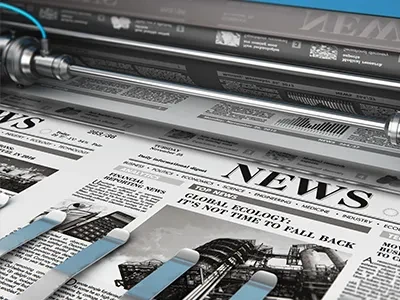
The technical requirements for digital printers primarily center on imaging precision, stability, material compatibility, and system control capabilities; these factors collectively determine the equipment's output quality and production efficiency.
Digital printers require high DPI output capabilities to ensure crisp image details and sharp text edges. Additionally, inkjet systems must precisely control ink droplet size and jetting accuracy to ensure accurate dot placement and prevent issues such as ghosting or broken lines. These demands place high requirements on printhead performance and motion control systems.
The equipment's guide rails, drive systems, and platform structures must maintain high-precision movement to prevent misalignment or the accumulation of errors during prolonged printing operations. Furthermore, the motor control system requires excellent responsiveness and synchronization capabilities to maintain a stable relative position between the printhead and the printing material.
Digital printers must support output on diverse materials-such as paper, plastic, fabric, and even metal surfaces-placing high demands on ink formulations and adhesion properties. At the same time, color management systems (CMS) and RIP software must deliver precise color reproduction to ensure output consistency across different devices.
Modern digital printers typically incorporate features such as automatic cleaning, nozzle monitoring, temperature control, and fault alerts to minimize the need for manual intervention. Moreover, the equipment must demonstrate robust continuous operation capabilities to meet the demands for long-term stability in commercial and industrial production environments.