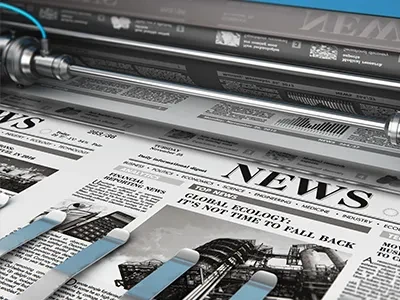
The core design principle of a digital printer involves converting image data from a computer into executable mechanical and jetting actions via a control system, thereby forming an image point-by-point on the material's surface.
Digital printers utilize the "dot-matrix imaging principle." Before entering the printer, an image is decomposed by a RIP (Raster Image Processor) system into countless tiny pixels, with each dot corresponding to a specific color and position. Subsequently, the printhead or imaging unit performs precise ink jetting or exposure based on this data, constructing the complete image through the accumulation of individual dots.
Consequently, print precision is primarily determined by the interplay between printhead resolution and motion control accuracy.
Digital printers typically consist of four main components: a data processing system, a jetting/imaging system, a mechanical motion system, and a control system. The data processing system handles image conversion and color management; the jetting/imaging system manages ink output or image formation; the mechanical motion system ensures the precise movement of the printhead or platform; and the control system coordinates the synchronization of all actions. This multi-system collaborative design enables the equipment to consistently deliver high-speed, high-precision output.
Digital printers emphasize the concept of "digital direct manufacturing," minimizing intermediate steps to enhance flexibility and responsiveness. By eliminating the need for fixed printing plates and allowing output content to be modified instantly via software, a single device can handle diverse tasks. This design philosophy has driven the printing industry's transition from traditional mass production toward flexible, personalized manufacturing.