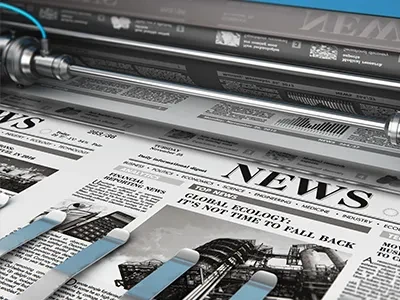
A digital printer is a printing device driven directly by digital files, characterized fundamentally by "on-demand output" and "plate-less printing." Unlike traditional printing, it eliminates the need for physical printing plates; instead, image data is transmitted directly from a computer or control system to the printer, where imaging is executed via technologies such as inkjet or laser. This approach enables small-batch, high-variety, and personalized printing while significantly shortening production cycles.
Technically, a digital printer is a mechatronic device that integrates precision mechanics, electronic control, and image processing technologies. It relies on high-precision printheads or imaging units for micron-level control, alongside software-driven color management and image resolution optimization. Consequently, it is not merely an output device but a digital production tool heavily reliant on data and control algorithms.
In terms of application, digital printers offer great flexibility, compatibility with a wide range of materials, and a high degree of automation. Whether the substrate is paper, plastic, fabric, or metal, direct printing is achievable provided the appropriate process is used. Compared to traditional printing, digital printing holds distinct advantages in personalized customization, rapid prototyping, and short-run production, making it a vital component of the modern printing and manufacturing industries.